




















TUC urges Ghana to move beyond inflation-focused policy framework


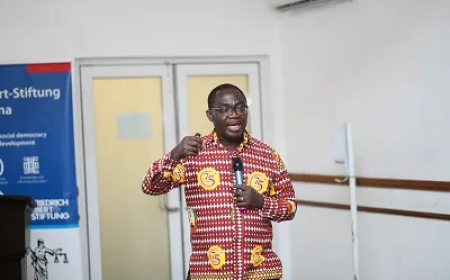
The Deputy Secretary-General of the Trades Union Congress, Kwabena Otoo, has called for a revision of Ghana’s economic policy approach, arguing that the current emphasis on inflation targeting is too narrow and limits efforts to tackle unemployment and promote inclusive growth.
Speaking on Channel One TV’s Point of View on April 29, he explained that Ghana’s monetary policy has been largely centered on maintaining price stability, with the Bank of Ghana mainly using interest rate adjustments as its primary policy instrument.
Dr. Otoo noted that this approach tends to overlook the critical role of job creation and broader developmental goals in shaping economic decisions. He emphasized that focusing solely on inflation control does not adequately address the country’s employment challenges.
He pointed out that some countries have broadened the responsibilities of their central banks to include employment objectives alongside inflation control, creating a more balanced policy framework. Examples cited include Reserve Bank of New Zealand and the Federal Reserve System, both of which have incorporated employment considerations into their mandates through policy reforms.
According to Dr. Otoo, Ghana should adopt a similar approach by restructuring its policy framework to make job creation a core objective alongside price stability. He stressed that without such reforms, economic policy may continue to fall short in addressing unemployment effectively.
He further argued that the current reliance on interest rate adjustments as the main policy tool highlights the limitations of the existing framework. Drawing from international examples, he explained that inflation targeting originally emerged from New Zealand’s central banking system, where price stability was once the sole mandate. However, reforms introduced in 2019 expanded this mandate to include employment generation, a move later mirrored by the United States and other economies.
Dr. Otoo concluded that meaningful policy reform, including potential amendments to the legal framework governing the Bank of Ghana, is necessary to align economic management with Ghana’s employment and development priorities.
What's Your Reaction?
 Like
0
Like
0
 Dislike
0
Dislike
0
 Love
0
Love
0
 Funny
0
Funny
0
 Angry
0
Angry
0
 Sad
0
Sad
0
 Wow
0
Wow
0