











Ashanti NPP MPs Question Government Priorities Over Downgraded Suame Interchange
Ashanti Region NPP MPs have criticised the government’s decision to downgrade the Suame Interchange project, questioning claims of funding constraints amid significant allocations for other road infrastructure projects.

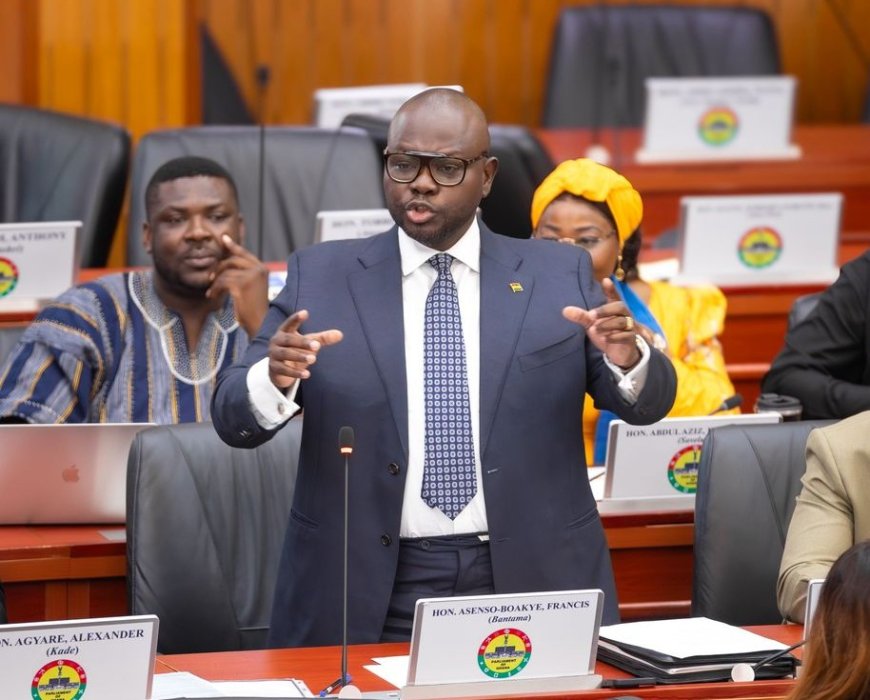
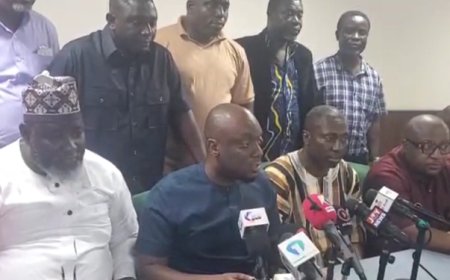
Members of the New Patriotic Party (NPP) caucus from the Ashanti Region in Parliament have raised concerns about the government’s funding decisions following the downgrading of the Suame Interchange Project, describing the move as inconsistent with broader road infrastructure spending across the country.
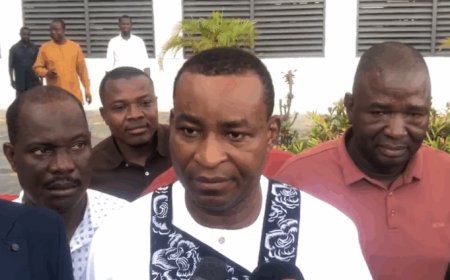
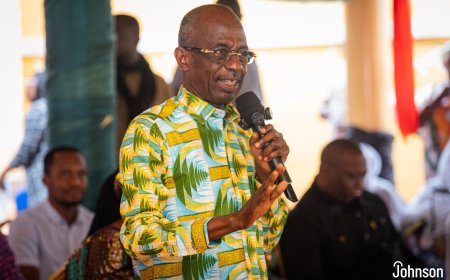
Addressing the media at a press conference on Monday, February 6, the MP for Bantama and former Minister for Roads and Highways, Francis Asenso-Boakye, questioned the government’s justification that debt constraints necessitated scaling down the project. He argued that the explanation does not align with the government’s ability to finance other large-scale road developments.
Mr Asenso-Boakye cited projects such as the Ofankor–Nsawam road as examples of major infrastructure works that continue to receive funding, asking why the Suame Interchange—seen as a permanent solution to Kumasi’s persistent traffic challenges—has been deprioritised.
The caucus also pointed out what it called policy inconsistencies, noting that the Suame Interchange was captured under the Big Push Road Programme in 2025, a framework designed to guarantee steady funding for critical national infrastructure.
They further referenced remarks by the Finance Minister indicating that GHS 43 billion has been earmarked for road infrastructure this year, questioning why a portion of that allocation could not be used to deliver the interchange in its original form.
According to the MPs, government’s decision to prioritise 64 new road projects awarded through sole sourcing over the completion of existing, high-impact projects undermines economic efficiency and long-term urban planning.
The caucus warned that failing to complete the Suame Interchange as originally planned would worsen traffic congestion in Kumasi, increase transportation costs, reduce productivity, and negatively affect mobility within the city.
They therefore urged the government to review its funding strategy, reinstate the original four-tier design of the Suame Interchange, and align infrastructure spending with Kumasi’s importance as Ghana’s second-largest city and a major transport hub.
“Kumasi deserves infrastructure that reflects its size and economic significance,” Mr Asenso-Boakye stressed, warning that cutting corners on critical projects would impose greater long-term costs on both the city and the nation.
What's Your Reaction?
 Like
0
Like
0
 Dislike
0
Dislike
0
 Love
0
Love
0
 Funny
0
Funny
0
 Angry
0
Angry
0
 Sad
0
Sad
0
 Wow
0
Wow
0