





















IMF Cuts Global Growth Forecast to 3.1% for 2026 Amid Middle East conflict
The IMF has lowered its global growth forecast to 3.1% for 2026, citing geopolitical tensions and the Middle East conflict. The report also warns of higher inflation and risks to emerging economies.

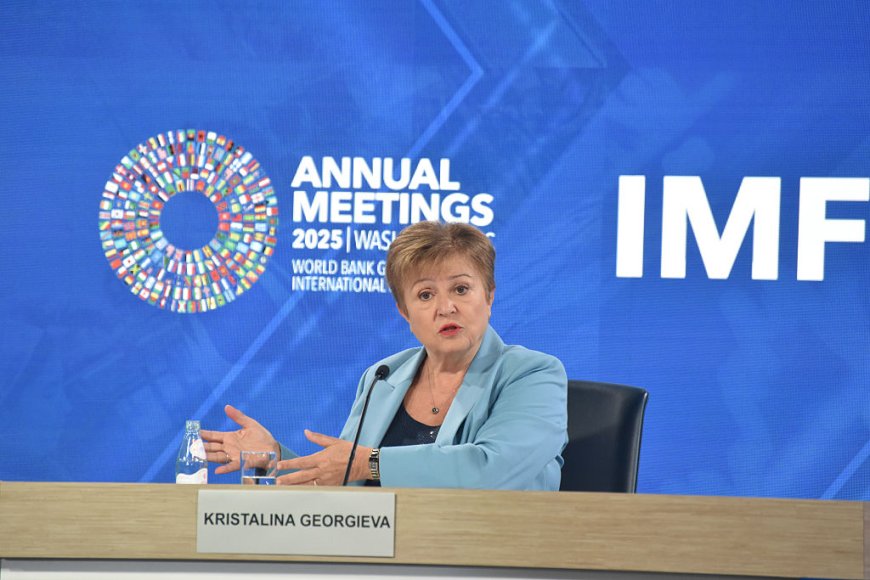
The International Monetary Fund (IMF) has projected that global economic growth will slow to 3.1 percent in 2026, citing rising geopolitical tensions, particularly the ongoing Middle East conflict, as a key factor weakening economic momentum.
The forecast, contained in the Fund’s April 2026 World Economic Outlook, points to a softening global outlook amid increasing uncertainty. The new projection is lower than the roughly 3.4 percent growth recorded in both 2024 and 2025 and remains below the historical average of 3.7 percent observed between 2000 and 2019.
The 2026 estimate has also been revised downward by 0.2 percentage points compared to the IMF’s January update, reflecting the impact of uncertainty on global trade, investment, and financial conditions.
According to the IMF, the projection assumes the conflict in the Middle East remains contained and disruptions to commodity markets ease by mid-2026. Even so, higher energy prices, elevated inflation expectations, and tighter financial conditions are expected to offset gains from technology-driven investment and supportive macroeconomic policies.
Global inflation is projected to increase to 4.4 percent in 2026 before declining to 3.7 percent in 2027, suggesting persistent price pressures linked largely to supply-side disruptions caused by the conflict.
The IMF noted that without the geopolitical shock, global growth in 2026 could have reached around 3.4 percent, indicating that the downgrade is largely driven by the conflict’s impact on commodity markets and economic sentiment.
Emerging market and developing economies are expected to face the greatest impact, especially commodity-importing countries with existing vulnerabilities. Growth in these economies has been revised down more sharply than in advanced economies, highlighting widening recovery gaps.
The report also outlined downside risks, warning that an extended or intensified conflict could push global growth to 2.5 percent in 2026, accompanied by higher inflation. In a more severe scenario involving major energy supply disruptions, growth could fall to around 2 percent.
Additional risks cited by the IMF include rising public debt, potential financial market corrections, trade tensions, and weakening credibility in monetary policy. While investment driven by artificial intelligence and structural reforms could offer upside potential, the Fund cautioned that the global economy is entering a period of heightened uncertainty requiring coordinated policy responses.
What's Your Reaction?
 Like
0
Like
0
 Dislike
0
Dislike
0
 Love
0
Love
0
 Funny
0
Funny
0
 Angry
0
Angry
0
 Sad
0
Sad
0
 Wow
0
Wow
0