






















GH₵11.28bn Liquidity Mop-Up Signals BoG’s Tight Monetary Stance

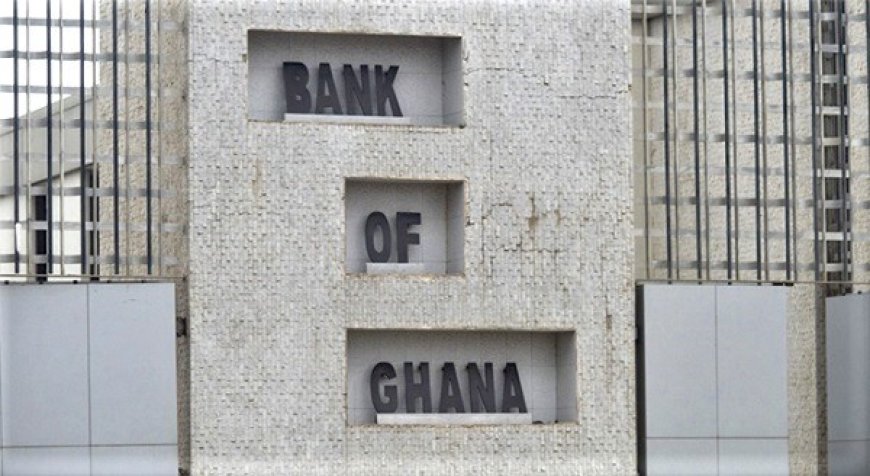
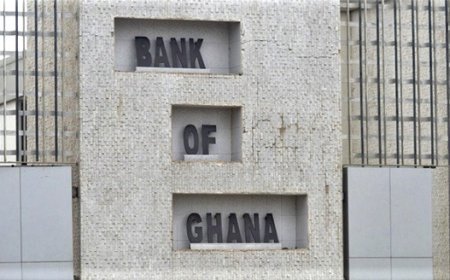
The Bank of Ghana (BoG) has absorbed GH₵11.28 billion from the financial system through its latest 14-day bill auction, highlighting the central bank’s ongoing efforts to control liquidity and support monetary stability.
According to the results of Tender 864 held on June 3, 2026, the central bank successfully issued GH₵11.28 billion worth of 14-day bills to investors and financial institutions.
The auction attracted bids with interest rates ranging between 10.40 percent and 11.00 percent per annum, with all eligible bids accepted in full. The instrument recorded a weighted average discount rate of 10.88 percent and a weighted average interest rate of 10.93 percent.
BoG bills serve as an important monetary policy tool, allowing the central bank to withdraw excess funds from the banking sector and influence short-term market liquidity. Unlike Treasury bills, which are issued by the government to fund public spending, BoG bills are specifically designed for liquidity management and monetary policy implementation.
The substantial size of the latest auction indicates that the central bank remains focused on mopping up excess liquidity in the economy as part of efforts to safeguard macroeconomic stability and contain inflationary pressures.
The operation comes amid a period of relatively low inflation, although the inflation rate has increased for two consecutive months, rising from 3.4 percent in April to 3.7 percent in May 2026.
For investors and market participants, the 10.93 percent weighted average interest rate offers insight into prevailing short-term liquidity conditions and reflects the Bank of Ghana’s current monetary policy direction.
The continued use of BoG bills also demonstrates the central bank’s determination to keep liquidity levels aligned with broader economic objectives, following the Monetary Policy Committee’s recent decision to maintain the policy rate at 14 percent.
The latest liquidity absorption exercise underscores the Bank of Ghana’s cautious monetary policy approach, aimed at sustaining economic recovery, preserving low inflation, and preventing excess liquidity from undermining price and exchange rate stability.
While banks benefit from the bills as a short-term investment option, the central bank relies on the instrument as a key mechanism for managing money supply and ensuring stability in financial markets.
Attention will now shift to upcoming auctions to determine whether the central bank maintains a similar pace of liquidity absorption as factors such as government expenditure, foreign exchange inflows, and market sentiment continue to shape liquidity conditions within the banking sector.
What's Your Reaction?
 Like
0
Like
0
 Dislike
0
Dislike
0
 Love
0
Love
0
 Funny
0
Funny
0
 Angry
0
Angry
0
 Sad
0
Sad
0
 Wow
0
Wow
0