
























Tema Oil Refinery plans to boost output from 28,000 to 45,000 barrels per day

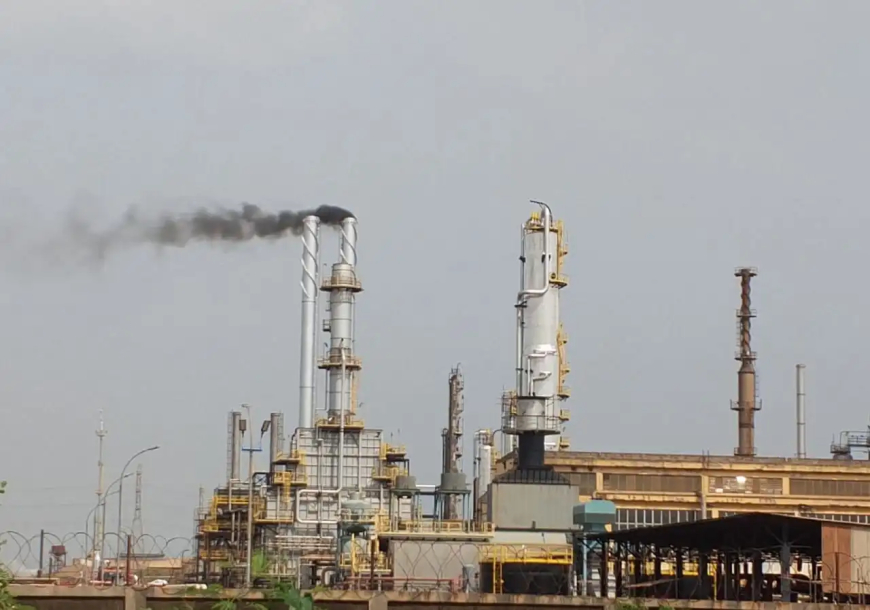
Tema Oil Refinery is preparing to increase its production capacity as part of measures aimed at strengthening operations at the facility.
Corporate Affairs Officer Godwin Mahama Ayaba disclosed that the refinery is currently working to raise its processing capacity from 28,000 barrels per stream per day to 45,000 barrels per stream per day.
Speaking in an interview on Monday, March 9, he explained that the upgrade will involve introducing the F61 processing unit to work alongside the existing F1 unit. Both units will be connected to the refinery’s crude distillation system to improve output.
Mr. Ayaba said that since the refinery resumed operations, production has been ongoing while technical processes are being carried out to fully integrate the F61 unit into the system.
Once this integration is completed, the refinery’s output is expected to increase from its current 28,000 barrels per stream daily to about 45,000 barrels per stream daily.
He also explained that the refinery is presently operating under a tolling arrangement. Under this system, companies provide crude oil to the refinery for processing, after which the refinery charges a processing fee and returns the refined petroleum products to the owners of the crude oil.
Mr. Ayaba clarified that within this arrangement, the refinery does not decide where the refined products are sold, as that responsibility lies with the companies that supplied the crude oil.
While the refinery’s current mainplate capacity stands at 28,000 barrels per stream per day, the addition of the F61 unit is expected to raise production to 45,000 barrels. In the medium term, the facility also plans to expand its output further to around 60,000 barrels per stream daily.
Meanwhile, Riverson Oppong, Chief Executive Officer of the Chamber of Oil Marketing Companies, has urged better technological coordination among Ghana’s petroleum management systems following recent supply disruptions.
Speaking on Citi Eyewitness News, Dr. Oppong clarified that the earlier disruption in petroleum supply was not caused by the Integrated Customs Management System. Instead, it resulted from issues with the Enterprise Relational Database Management System (ERDMS), which was later resolved.
However, he noted that the incident revealed weaknesses in the coordination between systems responsible for import processing and depot offloading within the petroleum supply chain.
What's Your Reaction?
 Like
0
Like
0
 Dislike
0
Dislike
0
 Love
0
Love
0
 Funny
0
Funny
0
 Angry
0
Angry
0
 Sad
0
Sad
0
 Wow
0
Wow
0