

























Uncompetitive Pricing, Loan Failures Push Cocoa Sector into Turmoil - Ato Forson Reveals $1 Billion Loss
Finance Minister Dr. Cassiel Ato Forson has outlined the key factors behind Ghana’s cocoa sector crisis, citing financing failures, production shortfalls, and over $1 billion in losses.


Finance Minister Dr. Cassiel Ato Forson has outlined the major factors responsible for the ongoing crisis in Ghana’s cocoa sector, pointing to financing challenges, uncompetitive pricing, and unprecedented production shortfalls.
According to the Minister, one of the primary causes of the current situation is the reluctance of international buyers to purchase Ghana’s cocoa, which has become uncompetitive compared to cocoa from other producing countries. He explained that cocoa from competing nations is currently selling at prices significantly lower than Ghana’s producer price, making it difficult to secure buyers.
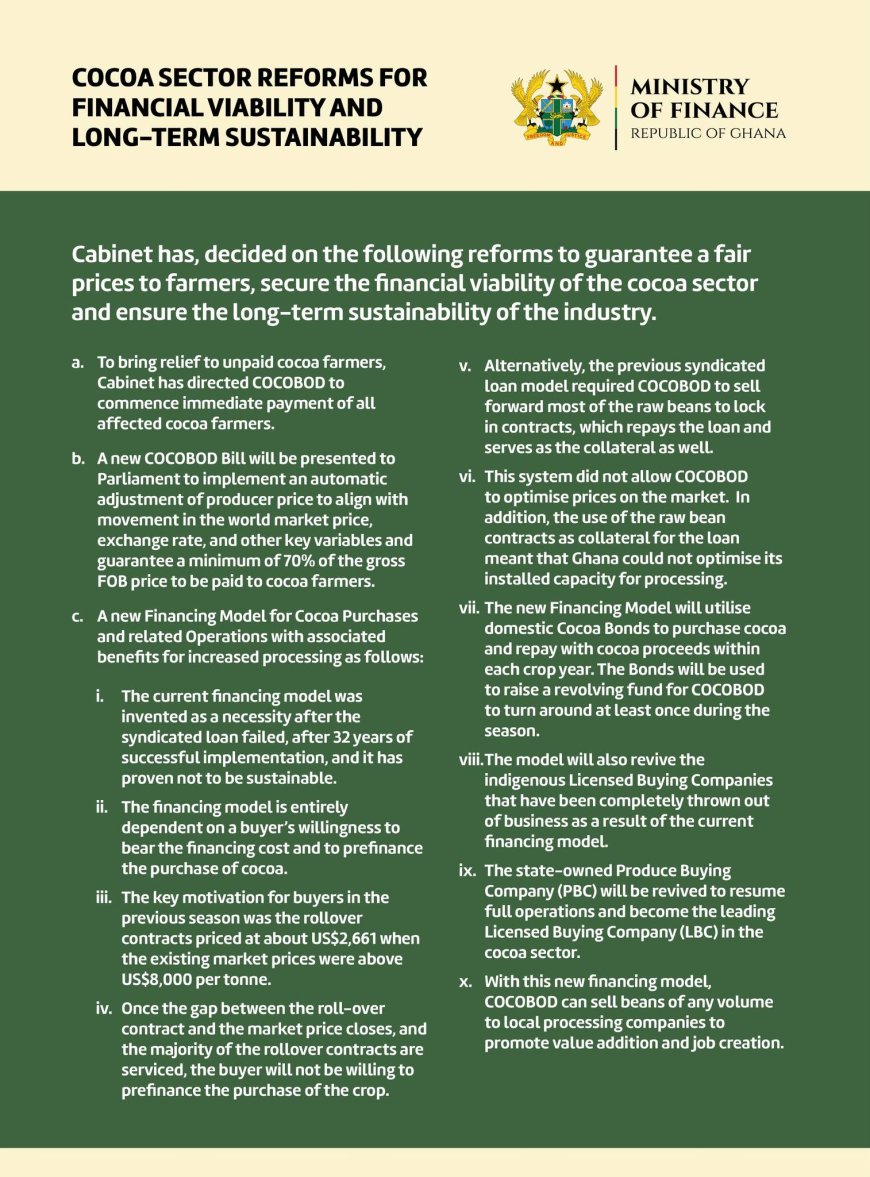
Dr. Forson further disclosed that the Ghana Cocoa Board (COCOBOD) lacked the liquidity to purchase cocoa beans from farmers for hedging and trading purposes. This, he said, stemmed from a financing model introduced during the 2024/25 season after the traditional syndicated loan arrangement failed. Under the new model, off-takers financed cocoa purchases a system that limited COCOBOD’s flexibility.
He revealed that COCOBOD’s financial health had already deteriorated significantly by 2022, leading to a default and restructuring of its Cocoa Bills in 2023. For the first time, the annual cocoa syndication process experienced major delays due to waning investor confidence in Ghana’s economy. The first tranche of funds for the 2023/24 season was only received on December 22, 2023 four months after the cocoa season had begun.
Production challenges further compounded the crisis. COCOBOD had projected an output of 800,000 tonnes for the 2023/24 crop season and committed 786,672 tonnes in contracts. However, actual production fell drastically to 432,145 tonnes representing a 45 percent deviation from projections.
The Minister described the deviation as unprecedented, noting that typical forecast variations range between 5 and 15 percent. The shortfall led to rollover contracts of 333,767 tonnes at an average price of US$2,661 per tonne, resulting in losses exceeding US$1 billion funds that would otherwise have benefited cocoa farmers and other stakeholders.
In 2024, COCOBOD was unable to pay the final tranche of its syndicated loan due in July and had to rely on a US$70 million bridge financing facility from the Ministry of Finance to avert default. Despite committing to repay the amount, COCOBOD subsequently defaulted on the bridge financing, further exposing the depth of its financial distress.
Dr. Forson indicated that the debt burden has now been inherited by the current management of COCOBOD, as government moves to implement reforms aimed at stabilising the sector.
What's Your Reaction?
 Like
0
Like
0
 Dislike
0
Dislike
0
 Love
0
Love
0
 Funny
0
Funny
0
 Angry
0
Angry
0
 Sad
0
Sad
0
 Wow
0
Wow
0