











Supreme Court dismisses Gifty Oware-Mensah’s pleading to halt her trial at the High Court

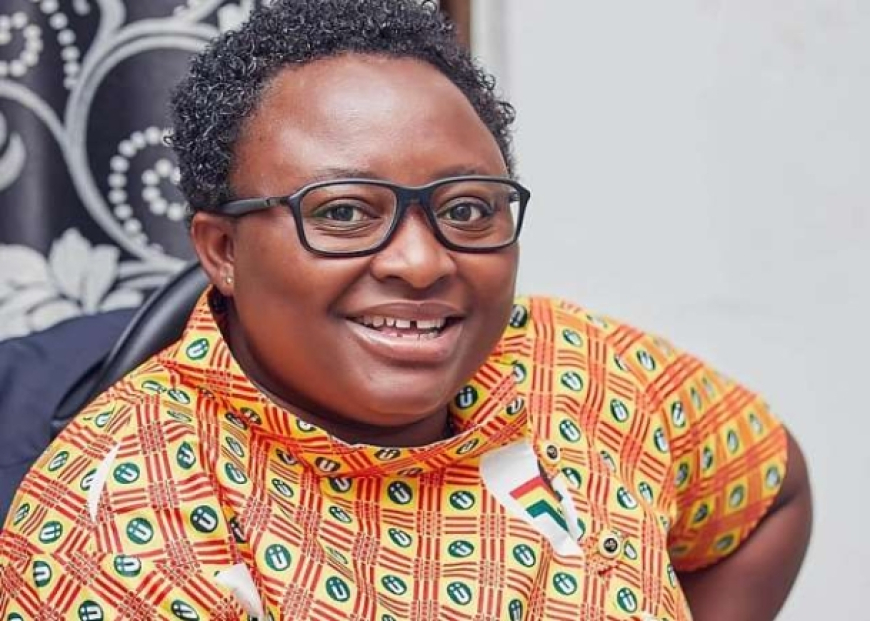
The Supreme Court has dismissed an application by former Deputy Executive Director of the National Service Authority, Gifty Oware-Mensah, seeking to halt her trial at the High Court pending a constitutional challenge over the disclosure of defence witnesses.
The former NSA official is standing trial for her alleged role in the ghost names on payroll scandal. She faces charges including stealing, willfully causing financial loss to the state, using public office for profit, and money laundering. She has pleaded not guilty.
Mrs Oware-Mensah had asked the apex court to suspend proceedings until it determines whether compelling an accused person to file a list of defence witnesses before trial is constitutional.
However, the five-member panel of the Supreme Court, presided over by Paul Baffoe-Bonnie, unanimously ruled that the High Court trial could continue despite the constitutional challenge.
“We are of the view that, having reviewed the processes so far, the application for stay does not meet the threshold for stay of proceedings. The applicant may choose to pursue the interpretation of the practice direction but the trial at the High Court may still go on,” the Chief Justice stated.
Lawyers for Mrs Oware-Mensah are challenging the constitutionality of Part 2(3a) of the Practice Direction governing criminal trials, which requires accused persons to file their witness statements during case management. The Practice Direction, issued in 2018 and signed by former Chief Justice Sophia Akuffo, applies to criminal proceedings across courts with criminal jurisdiction.
The defence argued that the High Court’s reliance on the Practice Direction violates Articles 19(2)(c) and 19(10) of the 1992 Constitution, which guarantee fair trial rights.
Making a case for his client, Gary Nimako Marfo insisted that the High Court’s indication that it would “advise itself” if the accused failed to file her witness list implied potential adverse consequences.
But Justice Senyo Dzamefe questioned that argument, noting that an accused person maintains the right to decide whether to testify or call witnesses. Justice Gabriel Scott Pwamang added that an accused may initially choose not to call witnesses and later change their decision during the trial.
“If you decide not to call any witnesses at this point, it is allowed, and if you decide to call witnesses later as the trial proceeds, you can do that. If you don’t have witnesses, you just have to tell the court,” Justice Pwamang explained.
The Court ruled that the High Court’s directive does not force the accused to immediately disclose defence witnesses, nor does it prevent her from filing them at any later stage of the trial.
“We do not think this application is enough to stop the case from moving to trial,” the Chief Justice concluded.
Background
Mr Marfo has consistently argued that requiring his client to disclose defence witnesses before the prosecution begins its case infringes on her constitutional rights. He therefore asked the Supreme Court to stay proceedings until the constitutional question is determined.
Since the trial began, the defence has resisted the High Court’s directive to comply with Part 2(3a) of the Practice Direction. On May 11, 2026, Mr Marfo informed the High Court of his intention to challenge the rule before the Supreme Court and requested an adjournment. This dispute over witness disclosure has dominated proceedings since January 20, 2026, delaying the substantive case.
A similar application to suspend proceedings was dismissed by the High Court on March 24, 2026.
The criminal case against Mrs Oware-Mensah follows investigations by The Fourth Estate in 2025, which uncovered thousands of ghost names and other irregularities on the National Service payroll.
What's Your Reaction?
 Like
0
Like
0
 Dislike
0
Dislike
0
 Love
0
Love
0
 Funny
0
Funny
0
 Angry
0
Angry
0
 Sad
0
Sad
0
 Wow
0
Wow
0