



























“No-Bed Syndrome Hindering Emergency Response” – National Ambulance Service
Ghana’s National Ambulance Service says the persistent “no-bed syndrome” is hindering emergency response, following a fatal hit-and-run case that exposed hospital capacity challenges.

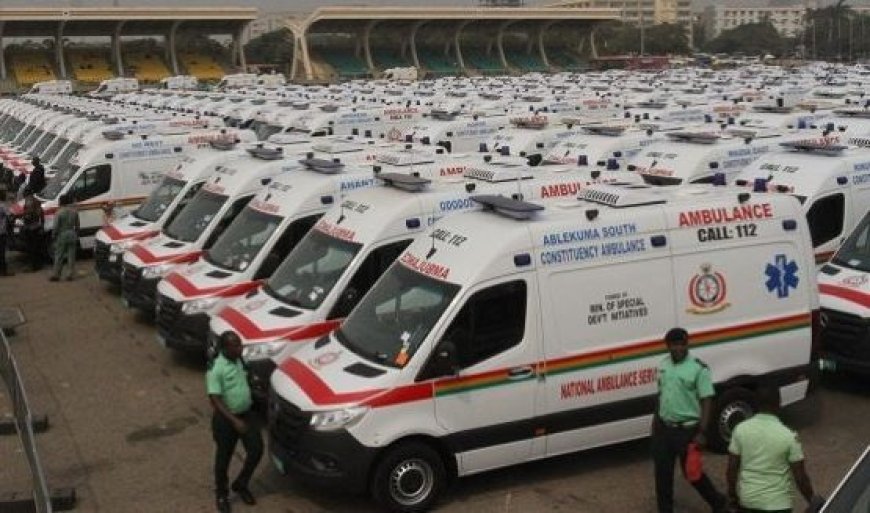
The Deputy Director of the National Ambulance Service, Simmons Yussif Kewura, has raised concerns about the persistent “no-bed syndrome,” describing it as a major barrier to effective emergency response in Ghana.
His comments follow public anger over the death of 29-year-old Charles Amissah, who suffered critical injuries in a hit-and-run incident at the Kwame Nkrumah Circle Overpass in Accra.
Emergency responders reportedly stabilised him at the scene before transporting him to the Police Hospital, the Greater Accra Regional Hospital, and later the Korle Bu Teaching Hospital.
However, he was allegedly denied admission at the facilities due to the unavailability of beds — a situation widely known as the “no-bed syndrome.”
Speaking to Citi News, Mr. Kewura said the incident highlights the challenges ambulance crews face in carrying out their duties. He explained that their role is to stabilise patients and transport them to health facilities for definitive care, a process that becomes difficult when hospitals cannot admit emergency cases.
He emphasised that while the Ambulance Service does not provide full medical treatment, its mission is to ensure patients reach facilities capable of delivering proper care — a goal undermined when beds are unavailable.
Mr. Kewura urged health authorities to implement sustainable solutions to address the issue and strengthen emergency healthcare delivery nationwide.
He added that although the Ambulance Service remains dedicated to saving lives, its effectiveness is constrained by limited hospital capacity.
What's Your Reaction?
 Like
0
Like
0
 Dislike
0
Dislike
0
 Love
0
Love
0
 Funny
0
Funny
0
 Angry
0
Angry
0
 Sad
0
Sad
0
 Wow
0
Wow
0