
















3.8% Inflation Isn’t Luck — It’s the Result of NDC’s Master Plan – Kwakye Ofosu
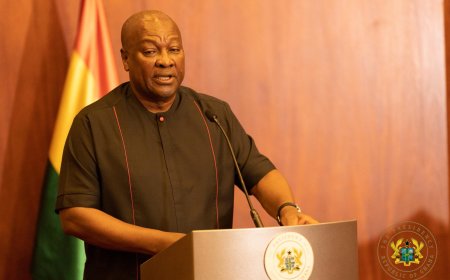
Government Communications Minister Felix Kwakye Ofosu has credited the NDC with Ghana’s strongest economic performance under the Fourth Republic, citing historic growth, currency gains and falling inflation now at 3.8 percent.


Minister of Government Communications, Felix Kwakye Ofosu, has asserted that the National Democratic Congress (NDC) has demonstrated the strongest economic management record under Ghana’s Fourth Republic, pointing to key macroeconomic milestones achieved under the party’s administrations.
Reacting to the sharp decline in inflation to 3.8 percent in January 2026, Kwakye Ofosu highlighted several economic indicators which he said reflect the NDC’s superior performance over the years.
He noted that Ghana recorded its highest annual economic growth of 14.4 percent in 2011, achieved its lowest inflation rate of 2.9 percent in April 1999, and maintained single-digit inflation for a continuous 33 months between 2010 and 2012.
The Minister further revealed that the cedi posted its strongest annual appreciation in Ghana’s history in 2025, rising by 40.7 percent against the US dollar. He also cited record foreign reserves of $13.8 billion and an import cover of 5.7 months as of the end of 2025.
“These achievements place on record that the NDC holds the best economic performance under the Fourth Republic,” he wrote in a social media post, cautioning against what he described as exaggerated claims of economic expertise by political opponents.
“Some make grand claims of economic brilliance yet delivered some of the worst outcomes in decades. The facts speak for themselves,” he added.
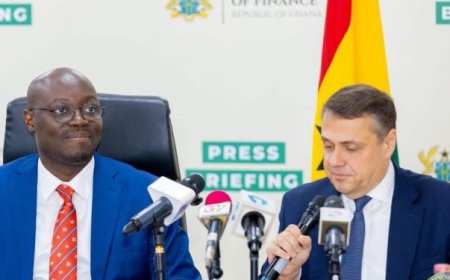
Meanwhile, Government Statistician Dr Alhassan Iddrisu has urged authorities to consolidate the gains made in stabilising prices following the sustained drop in inflation.
He called on government to maintain fiscal discipline, stabilise food prices and invest in critical areas such as storage facilities, irrigation, transportation and market access to reduce regional price disparities.
“Lower inflation creates an opportunity to improve efficiency, strengthen supply chains and translate cost savings into more stable consumer prices,” Dr Iddrisu explained.
He also advised households to take advantage of the improved price environment to plan budgets carefully, prioritise essential spending and save where possible.
According to data from the Ghana Statistical Service, inflation fell sharply from 23.5 percent in January 2025 to 3.8 percent in January 2026, marking the 13th consecutive month of decline and the lowest rate recorded since the rebasing of the Consumer Price Index in 2021.
Food inflation eased to 3.9 percent from 4.9 percent in December 2025, while non-food inflation also dropped significantly to 3.9 percent from 5.8 percent, reflecting reduced cost pressures across housing, transport, utilities and other consumer sectors.
Regionally, inflation varied widely, with the Savannah Region recording a negative rate of 2.6 percent indicating falling prices while the North East Region posted the highest rate at 11.2 percent.
The sustained moderation in inflation follows the Bank of Ghana’s recent decision to reduce its policy rate by 250 basis points to 15.5 percent, a move now seen as consistent with improving price trends.
Dr Iddrisu reiterated that continued fiscal discipline and sound macroeconomic management will be key to preserving the progress made in stabilising Ghana’s economy.
What's Your Reaction?
 Like
0
Like
0
 Dislike
0
Dislike
0
 Love
0
Love
0
 Funny
0
Funny
0
 Angry
0
Angry
0
 Sad
0
Sad
0
 Wow
0
Wow
0