


















GH¢26bn Cocoa Road Contracts and Jute Sack Waste Deepened COCOBOD’s Debt – Randy Abbey


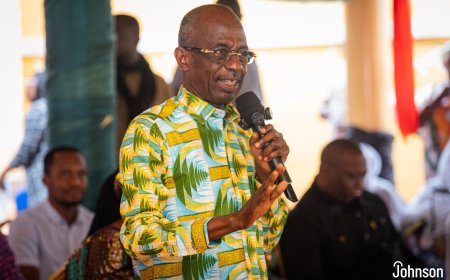
The Chief Executive Officer of the Ghana Cocoa Board (COCOBOD), Dr. Randy Abbey, has disclosed that the institution is grappling with its worst financial position in nearly eight decades, following years of accumulated debt, heavy contract exposure, and procurement inefficiencies.
Speaking on Channel One TV’s The Point of View with Bernard Avle on Monday, February 9, 2026, Dr. Abbey revealed that COCOBOD closed 2024 with a total debt of GH¢32.9 billion and a negative equity position of about GH¢3.8 billion, indicating that the organisation’s liabilities exceeded its assets.
According to him, this marked the first time in COCOBOD’s 79-year history that the board had recorded negative equity. He contrasted the situation with 2016, when COCOBOD posted a positive equity of approximately GH¢1.8 billion.
“At year-end 2024, when I took over, COCOBOD had a debt of GH¢32.9 billion and a negative equity of about GH¢3.8 billion. This is the first time in the history of the organisation that liabilities exceeded assets,” Dr. Abbey stated.
GH¢26bn Cocoa Road Contract Exposure
A key driver of the financial strain, Dr. Abbey explained, is COCOBOD’s exposure to cocoa road construction contracts valued at about GH¢26 billion. However, only GH¢4.4 billion of this amount is currently reflected in the official debt figure, as it represents certified works awaiting payment.
“The GH¢26 billion refers to road contracts awarded by COCOBOD, but only GH¢4.4 billion of that exposure had matured into certified obligations sitting at our cash office,” he clarified.
Jute Sack Procurement Inefficiencies
In addition to infrastructure commitments, the COCOBOD CEO highlighted longstanding procurement lapses, particularly in the purchase of jute sacks used for cocoa packaging.
Dr. Abbey revealed that the board repeatedly procured new jute sacks annually without clearing existing stock, resulting in avoidable expenditure of about $48 million.
“COCOBOD kept procuring jute sacks every year while old stocks were still uncleared, leading to unnecessary spending of about $48 million,” he said.
Scale of the Challenge
Dr. Abbey noted that the combined impact of legacy debts, uncrystallised road contracts, and procurement inefficiencies largely explains the GH¢32.9 billion debt burden he inherited, stressing that significant reforms will be required to stabilise COCOBOD’s finances and restore confidence in the cocoa sector.
What's Your Reaction?
 Like
0
Like
0
 Dislike
0
Dislike
0
 Love
0
Love
0
 Funny
0
Funny
0
 Angry
0
Angry
0
 Sad
0
Sad
0
 Wow
0
Wow
0