
















VAT, Income Tax Gaps Draining Revenue — Ghana Could Avoid IMF if Compliance Improves

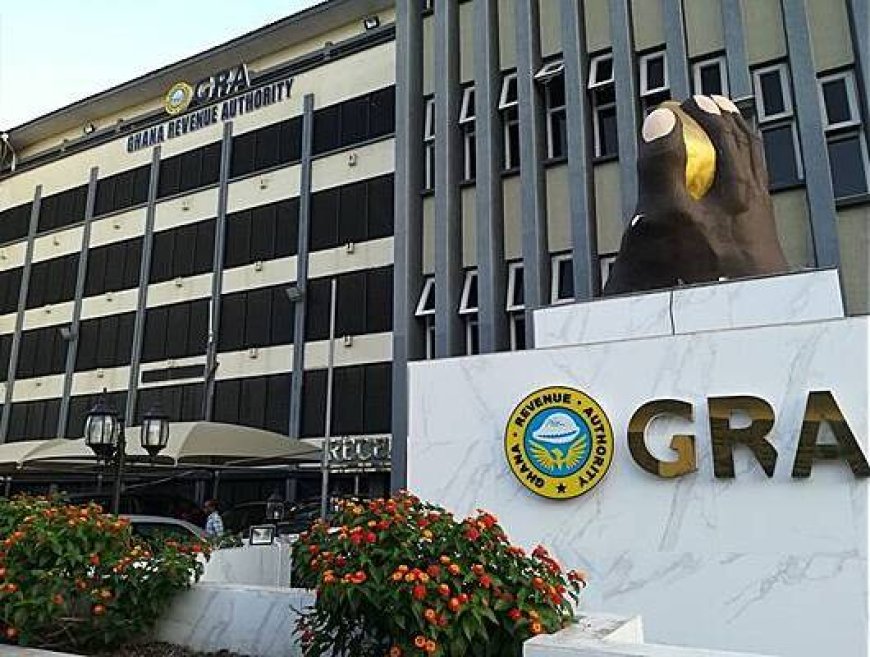
Ghana continues to lose significant revenue due to weak tax compliance, with the Ghana Revenue Authority (GRA) warning that bridging these tax gaps could drastically reduce the country’s reliance on IMF support and external borrowing.
Speaking at an Executive Business Dialogue organised by Markers & Partners, Dr. Martin Kobil Yamborigya, Acting Commissioner of the Domestic Tax Revenue Division, revealed that the country currently collects only about a third of its owed income taxes—a shortfall he described as “deeply worrying” for an economy striving for fiscal stability.
“It’s a concerning situation: Ghana’s income tax gap is 67%, which means we are only collecting 33% of what is due,” he said.
The problem is equally severe in the Value Added Tax (VAT) domain, where only 39% of potential revenue is collected, leaving a 61% compliance gap.
Dr. Yamborigya emphasised that meaningful tax reforms must focus on broadening the tax base, closing compliance gaps, and reducing revenue leakages, all while maintaining a predictable and transparent system for businesses.
“In an evolving economic environment like ours, tax reforms must ensure efficiency, transparency, and predictability for businesses, while bringing more individuals and companies into the tax net and plugging revenue leakages,” he explained.
He further argued that improving compliance could fundamentally transform Ghana’s fiscal outlook.
“If we can close the tax gap, we won’t need IMF support or to borrow externally. There are visible income-generating activities across the country, but the question is: are these incomes being taxed?” he asked.
Dr. Yamborigya reiterated that the ultimate aim of ongoing tax reforms is to expand the tax net and secure sustainable economic growth for the nation.
What's Your Reaction?
 Like
0
Like
0
 Dislike
0
Dislike
0
 Love
0
Love
0
 Funny
0
Funny
0
 Angry
0
Angry
0
 Sad
0
Sad
0
 Wow
0
Wow
0